
Ergonomics is a concept of fitting an environment and a person to each other in a cohesive manner.
It is an awareness of postural alignment in different positions, spaces, and areas of life to decrease aches and pains. Prolonged positioning, especially when in a stressed posture, over time can have lasting effects that lead to chronic pain or other serious issues. Ergonomics is used as a way to understand and alleviate tension on muscles, joints, and bones to help create a healthier life. By implementing a proper setup and utilizing good body mechanics, the study of ergonomics has shown vast improvements in the quality of life of many people.
How Positioning Effects the Body
Ergonomics is a concept of fitting an environment and a person to each other in a cohesive manner. It is an awareness of postural alignment in different positions, spaces, and areas of life to decrease aches and pains.
Prolonged positioning, especially when in a stressed posture, over time can have lasting effects that lead to chronic pain or other serious issues.
Ergonomics is used as a way to understand and alleviate tension on muscles, joints, and bones to help create a healthier life. By implementing a proper setup and utilizing good body mechanics, the study of ergonomics has shown vast improvements in the quality of life of many people.
A proper ergonomic setup helps reduce pain and prevent strain. Focus on good alignment to protect your body. Ergonomics is more than posture. It also includes using tools that support your workspace. For example, if you look down at a phone or computer, raise the monitor to eye level. This keeps your neck straight and neutral.
Keep both feet flat on the floor when sitting. If your chair is too high, use a footstool. Avoid leaning forward all day because it stresses the spine. Move your chair closer to the desk. Add a lumbar support pillow for better posture. These small changes protect your back, neck, and shoulders. They also create a more comfortable and pain-free work environment.
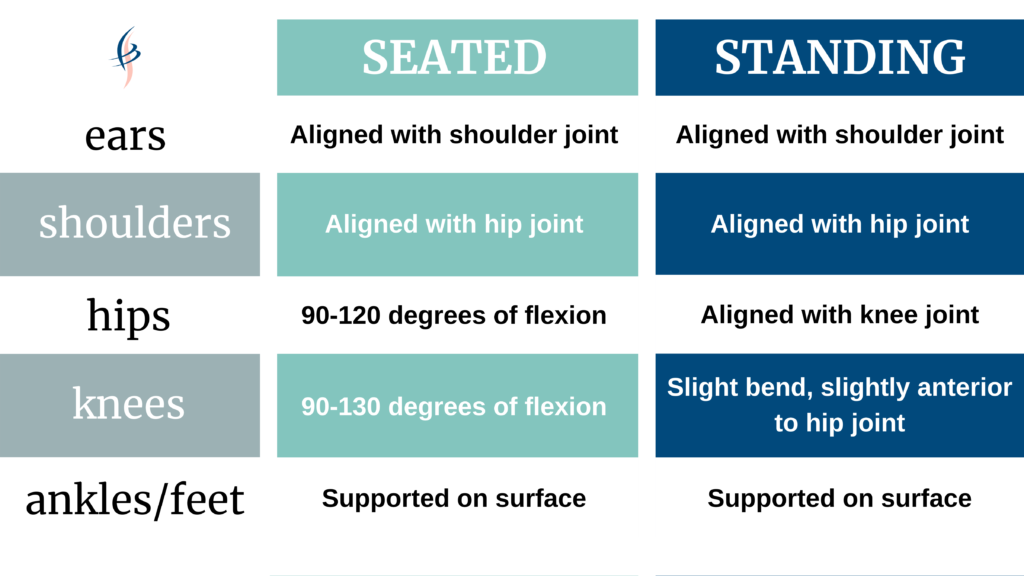
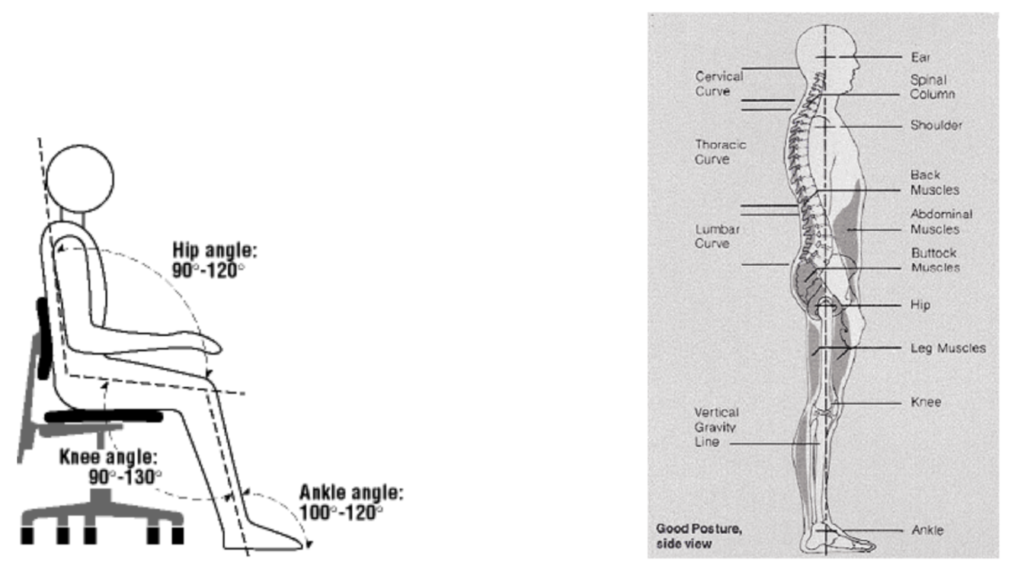
Sitting or standing in one position too long breaks down the body. It also creates poor postural habits that can lead to lasting pain.
When setting up your environment, focus on alignment cues. This reduces stress on joints and muscles and lowers long-term wear and tear. Even if you have little or no pain now, using good ergonomics can help prevent chronic pain in the future.
Ergonomic set up is all about creating balance within the body and it is important to note that movement is an extremely important part of decreasing some of the stressors that can cause pain.
Lengthening and stretching overly tight muscles while also working to strengthen and strengthening weak muscles, creates a balance within our bodies to help with excess tension loads.
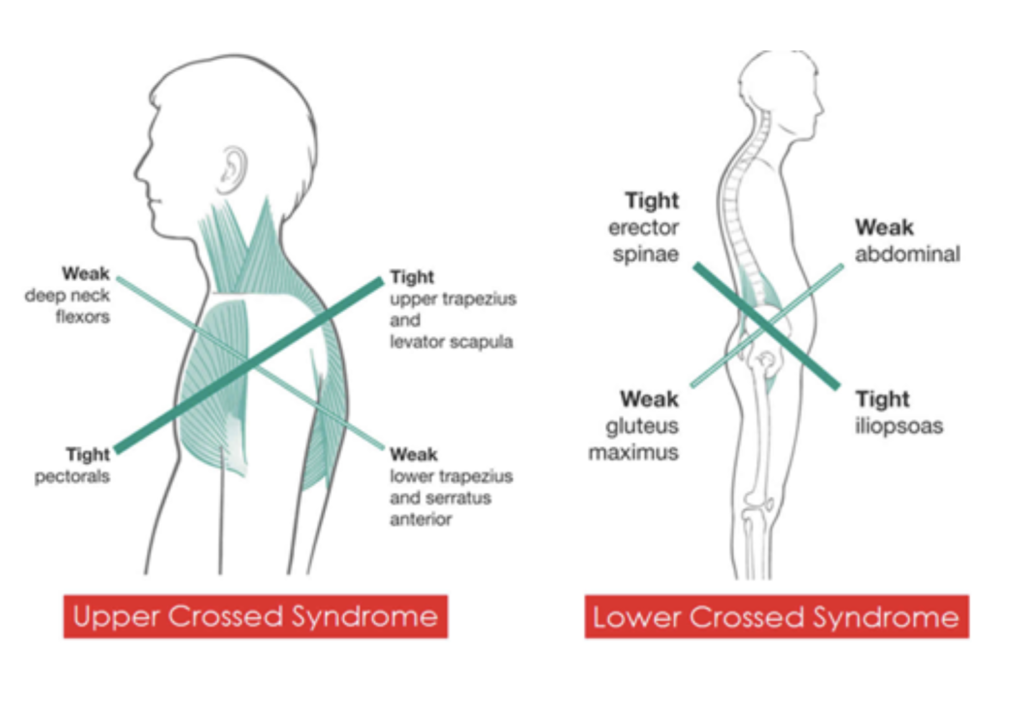
This picture, shows a common muscle pattern that has developed within many individuals walking around today. This “poor” posture is often caused by excess sitting or leaning forward over a computer or cell phone. Bodies begin to compensate for the excessive forward flexed position by increasing the arch in our low backs in order to stay aligned.
This creates stretched and weak glutes, abdominals, shoulder blade muscles, and deep neck flexors. This also creates tightness through the muscles in the chest, neck, low back, and hips. The tight muscles on one side of the body and weak muscles on the other side of the body contribute to the already misaligned positioning.
Correct Movement
Good body mechanics with movement is essential in maintaining a healthy back. The Hip hinging, is a vital movement to master to protect your back and reduce risk of injury. Hip hinging makes sure the individual utilizing the large weight bearing joint of the hips and not the lumbar spine with forward bending and lifting. Hip hinging should be used to perform most everyday activities such as getting up and down from a chair or lifting so that we don’t stress the muscles and nerves in our back.
Keeping an active healthy lifestyle is important in combating the effects of poor posture. Exercises, such as Pilates, along with lower back/ hip stretches can help significantly improve pain. The correct exercises can give our bodies the tools we need to improve our postural strength and stability.
Aside from exercise to maintain good muscle quality, body mechanics is another important aspect when considering the ergonomic setup. To decrease excess stress place on our spines it is important to maintain proper body mechanics when performing everyday activities.
- Maintaining a neutral spine- It is important to keep our backs within their natural curves and focus on maintaining a straight back.
- Hip Hinging- This movement comes from rotating on the ball of our hip joint in order to bend our bodies forward without flexing in our spine and puts the body in a better position to decrease the strain on back muscles and the spine.
- Squatting- Our leg musculature is a very important tool and should be used to help gain power when lifting objects or changing positions, such as standing up from a chair.